Read this article in 中文 Français Deutsch Italiano Português Español
DNV: LNG bunker vessel fleet may need to double by 2030

September 10, 2026
Growing LNG-fueled shipping could require as many as 208 bunker vessels worldwide by end of decade
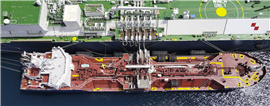 The global fleet of LNG bunker vessels may need to more than double by 2030 as growth in
 LNG-fueled shipping outpaces development of the infrastructure needed to supply those vessels, according to a new DNV white paper.
DNV estimates that between 165 and 208 LNG bunker vessels could be required worldwide by the end of the decade. The classification society said demand for LNG bunkering capacity is increasing faster than the bunker fleet, potentially creating a fuel-supply constraint as more LNG-powered ships enter service.
The findings are contained in DNV’s white paper, “Gas bunker vessels: facilitating the transition to alternative fuels,” which examines the infrastructure required to support increasing use of LNG and other gaseous marine fuels. DNV is an independent assurance and risk management company headquartered in Norway. It is one of the world’s leading classification societies for the maritime industry, providing ship classification, technical standards, certification and advisory services. DNV also operates across the energy, oil and gas, and other industrial sectors.
“LNG-fuelled shipping is growing faster than the bunkering network needed to support it,” said Martin Cartwright, global business director, Gas Carriers & FSRUs, DNV Maritime. “Closing this gap will require coordinated investment across the bunkering ecosystem, underpinned by robust safety standards, operational readiness and competence.”
Bunkering infrastructure under pressure
LNG bunker vessels transfer LNG to LNG-fueled ships, allowing vessels to refuel at ports or anchorages without relying exclusively on fixed shoreside fueling infrastructure.
As the number and size of LNG-fueled ships increase, DNV expects bunker vessels to become an increasingly important component of the LNG marine supply chain. The company said the vessels are evolving from specialist fuel-delivery assets into critical infrastructure supporting broader adoption of alternative marine fuels.
The challenge extends beyond simply adding bunker vessels. Additional LNG storage, loading and distribution infrastructure will be required along with the operational systems and trained personnel necessary to handle a growing number of bunker operations.
“Shipping’s fuel transition depends on more than ships and fuel choices,” said Cristina Saenz de Santa Maria, CEO, DNV Maritime. “It also depends on the infrastructure, supply chains, and operational capabilities needed to make alternative fuels available safely and at scale.”
DNV said investment in flexible and reliable bunkering infrastructure will be necessary as the marine fuel market evolves.
LNG carriers could be converted
One option for accelerating expansion of the bunker fleet is conversion of suitable small-scale LNG carriers into bunker vessels, according to the report.
Such conversions could provide additional capacity without requiring an entirely new purpose-built fleet, although vessels would have to meet the technical, regulatory and operational requirements associated with ship-to-ship LNG bunkering.
DNV’s study examines bunker vessel design considerations, regulatory requirements and technical requirements as well as operational practices and safety management.
The report also points to biomethane as a potential pathway that could use much of the infrastructure being developed for conventional LNG. Because biomethane can be introduced into the LNG supply chain, expansion of LNG bunkering infrastructure could support lower-carbon gaseous fuels without requiring an entirely separate distribution system.
Infrastructure could support future fuels
DNV also examined the potential emergence of ammonia as a marine fuel. While ammonia has different handling characteristics and would require dedicated equipment and safety measures, the company said experience gained from developing LNG bunkering operations could help support future ammonia bunkering.
That includes experience with ship-to-ship fuel transfers, safety management, crew competence and development of geographically dispersed bunkering networks.
For LNG, however, the infrastructure requirement is more immediate. With the population of LNG-fueled vessels continuing to expand, DNV said investment in bunker vessels and the supporting supply chain will have to accelerate if fueling capacity is to keep pace with the ships entering service.
CONNECT WITH THE TEAM