Read this article in 中文 Français Deutsch Italiano Português Español
Dallas Fed survey shows stronger gas production, tighter service conditions

September 30, 2026
Survey covers energy companies operating in Texas, northern Louisiana and southern New Mexico
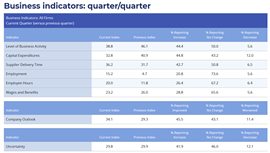
Natural gas production accelerated during the third quarter as oil and gas activity continued to expand across the Federal Reserve Bank of Dallas’ Eleventh District, although rising costs, longer supplier lead times and sharply different outlooks between producers and service companies continued to shape the market.
The Dallas Fed Energy Survey’s broad business activity index remained solidly positive at 38.8 in the third quarter, down from 46.1 in the second quarter. The decline indicates that activity continued to expand, although at a somewhat slower pace.
The survey covers energy companies operating in Texas, northern Louisiana and southern New Mexico, including exploration and production firms and oilfield service companies.
Natural gas production gains
Among E&P companies, the natural gas production index climbed to 14.8 from 3.7 in the second quarter. The oil production index also increased, rising to 20.7 from 15.0.
The stronger gas reading comes as producers and midstream companies prepare for continued growth in LNG exports, power generation demand and other gas-intensive markets.
Survey respondents expect Henry Hub natural gas prices to average $3.29/MMBtu at the end of 2026. Longer term, executives expect prices to reach an average of $3.82/MMBtu two years from now and $4.28/MMBtu five years from now. Henry Hub spot prices averaged $2.97/MMBtu during the survey period.
Service equipment utilization rises
Conditions also strengthened for oilfield service companies, a sector that can provide an indication of demand for equipment, maintenance and field support.
The equipment utilization index increased to 41.9 from 31.9 in the second quarter. Operating margins remained positive, although the index declined from 52.2 to 37.2, indicating that margins continued to expand but at a slower rate. The prices-received index remained positive at 16.3, down from 24.5.
At the same time, cost pressures remained elevated.
The input cost index for service companies registered 60.4, down slightly from 64.4 in the previous quarter. E&P companies also reported continued increases in finding and development costs and lease operating expenses. All of the survey’s cost indexes remained above their historical averages. Dallas Fed
Supplier delivery times lengthened further during the quarter. The overall delivery-time index increased from 31.7 to 36.2, while the reading for E&P firms remained particularly high at 43.9. The service-company index rose from 11.1 to 21.4.
Those findings could be significant for compression operators, packagers and equipment suppliers already dealing with lengthy lead times for engines, compressors, electrical equipment and other major components.
Spending priorities differ by company size
The survey also found a sharp difference in how large and small producers expect to use additional cash generated during 2026.
Among large E&P companies, 50% said their primary use of additional cash flow would be returns to shareholders or owners. Capital expenditures ranked second at 21%.
Smaller producers were more inclined to reinvest. Capital expenditures were the leading choice among small E&P firms at 31%, followed by debt reduction at 23%.
The distinction could be important for equipment suppliers because smaller producers may be more likely to direct incremental cash flow toward drilling, production equipment and infrastructure, while larger operators continue to emphasize capital discipline.
Producer and service outlooks diverge
Despite continued growth, sentiment varied significantly across the industry.
The E&P outlook index reached 50.0, while the service-company outlook index was only 4.6. Producer uncertainty was also substantially higher, with the E&P uncertainty index at 40.2 compared with 9.5 for service companies.
Respondent comments pointed to geopolitical instability, rising costs, credit availability and uncertainty surrounding commodity prices as major concerns.
One E&P respondent said material and labor costs continued to rise while debt financing became more expensive. Another said tighter bank lending was making it more difficult for smaller independent producers to compete.
Service companies also cited pressure from higher costs and changing demand patterns. One respondent said data center construction was causing some firms to shift resources away from the energy sector, while another reported continued difficulty attracting and retaining workers despite relatively high starting pay.
Labor market strengthens
Employment conditions improved during the quarter. The aggregate employment index rose from 4.7 to 15.2, while the employee-hours index increased from 11.8 to 20.0. The wages and benefits index remained positive at 23.2.
Taken together, the survey points to an energy market that remains active, with stronger gas production and higher equipment utilization, but also continued pressure from costs, labor constraints and longer equipment lead times.
For the gas compression industry, the combination suggests continued demand opportunity alongside an increasingly challenging environment for supplying equipment and skilled personnel.

CONNECT WITH THE TEAM