Read this article in 中文 Français Deutsch Italiano Português Español
Golden Pass LNG ships first cargo from Train 1

April 25, 2026
Startup marks first new U.S. LNG export volumes of 2026 as global markets navigate supply risk
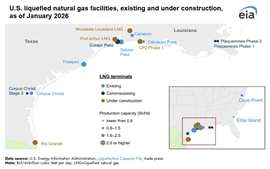
Golden Pass LNG shipped its first cargo from Train 1 on April 22, marking the start of commercial exports from the ninth U.S. liquefied natural gas export terminal and the only new domestic LNG facility expected to begin shipments in 2026. The cargo departed 23 days after the project achieved first LNG production in March, adding new U.S. supply to the global market at a time of heightened concern over energy security and shipping risk, according to the U.S. Energy Information Administration (EIA)
The startup comes as geopolitical tensions around the Strait of Hormuz continue to tighten global LNG trade flows. According to project data, more than 10 Bcf/d of global LNG supply—about 20% of worldwide volumes—has been exposed to disruption tied to developments in the region, underscoring the importance of new export capacity entering service outside the Middle East.
Located in Sabine Pass, Texas, Golden Pass LNG is a joint venture between QatarEnergy, which holds a 70% stake, and ExxonMobil, which owns the remaining 30%. The partners reached final investment decision on the project in February 2019, positioning Golden Pass as one of the largest LNG export developments under construction on the U.S. Gulf Coast.
The project was delayed in 2024 after its lead construction contractor filed for Chapter 11 bankruptcy, forcing the owners to bring in a replacement contractor to complete the facility. Despite that setback, Train 1 has now entered service, restoring momentum to one of the most closely watched LNG startups in the U.S. export market.
Golden Pass LNG is designed with three liquefaction trains, each with nominal capacity of 0.7 Bcf/d and peak capacity of 0.8 Bcf/d. Once fully complete, the terminal will have total nominal export capacity of 2.0 Bcf/d and peak capacity of 2.4 Bcf/d, making it the third-largest operating LNG export terminal in the United States by nominal capacity, behind Sabine Pass LNG and Plaquemines LNG.
Like other U.S. LNG facilities, Golden Pass is expected to operate above nominal nameplate capacity at times, though below peak output. That flexibility has become increasingly important as global buyers seek incremental supply to offset disruptions, seasonal demand swings and declining legacy production in other regions.
Golden Pass plans to bring Train 2 online in the second half of 2026, followed by Train 3 in the first half of 2027. Once all three trains are operating, the project is expected to become a meaningful new source of U.S. LNG supply into global markets and a key contributor to Gulf Coast demand for feedgas, compression and related midstream infrastructure.



CONNECT WITH THE TEAM