Read this article in 中文 Français Deutsch Italiano Português Español
Caterpillar expands 3600 engine production as gas compression demand grows

November 12, 2026
Winston-Salem facility will provide additional assembly and testing capacity as company targets nearly tripling large reciprocating engine production capacity by 2030
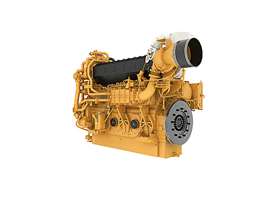 The Cat G3600 Gen 2 engine. Caterpillar plans to establish a second assembly and testing location for its 3600-series large reciprocating engines in Winston-Salem, North Carolina. (Image: Caterpillar)
Caterpillar plans to establish a second assembly and testing location for its 3600-series large reciprocating engines in Winston-Salem, North Carolina, as the company expands manufacturing capacity to meet growing natural gas compression demand.
The company will repurpose part of an existing facility that currently manufactures locomotive engines, using its established infrastructure and workforce to increase production capacity for engines serving oil and gas customers.
Caterpillar Chairman and CEO Joe Creed outlined the expansion during the company’s third-quarter earnings call, saying the additional capacity will support the company’s broader effort to increase large reciprocating engine manufacturing capacity to nearly three times its 2024 level by 2030.
“The footprint will support our Oil & Gas customers to meet the growing need for natural gas compression,” Creed said.
He said repurposing existing manufacturing facilities offers the quickest and most cost-effective way to expand production while minimizing the time required to bring additional capacity online.
Capacity remains a constraint
The Winston-Salem expansion comes as Caterpillar continues to experience strong demand for large reciprocating engines and gas turbines across its oil and gas and power generation businesses.
Creed said manufacturing capacity remains the principal factor limiting growth in the company’s Power & Energy segment, even as production increases.
During the question-and-answer portion of the call, he acknowledged that manufacturing operations are running with little spare capacity as the company works to fulfill customer orders.
“There is no slack in the system,” Creed said, describing the pressure on manufacturing operations.
He noted that a test cell was temporarily out of service during the third quarter, although the company was able to overcome the interruption without materially affecting its results.
Caterpillar expects to increase output incrementally as new manufacturing capacity becomes available, rather than relying on a single expansion to resolve its production constraints.
The company is also managing longer equipment delivery schedules. Large reciprocating engine orders now extend into 2029, while some turbine orders reach into 2030.
Compression and aftermarket demand strengthen
Caterpillar’s Power & Energy segment reported third-quarter sales of $8.8 billion, an 18% increase from the same period in 2025. Segment profit increased 31% to $2.1 billion.
Sales to end users in oil and gas applications increased 5%, driven primarily by turbines and turbine-related services.
Caterpillar expects moderate growth in its oil and gas business for full-year 2026, following record sales in 2025. Reciprocating engine sales are expected to increase, supported by continued demand for natural gas compression equipment.
The company also reported growing demand for reciprocating engine aftermarket parts and strong service revenue from oil and gas customers.
Caterpillar’s G3600 series is widely used to drive large reciprocating compressors in natural gas gathering, processing and transmission applications.
The manufacturer introduced its G3600 Gen 2 engine in 2023, offering increased power output and reduced emissions compared with the previous generation.
Creed said the company’s gas compression business remains an important part of its growth strategy, alongside expanding demand for power generation equipment serving data centers.
Caterpillar expects that additional natural gas transportation infrastructure will be needed to support rising electricity demand, creating opportunities for both its reciprocating engine business and Solar Turbines.
As the installed population of engines and turbines increases, the company also expects demand for maintenance, replacement parts and aftermarket services to grow.
The Winston-Salem expansion is intended to help Caterpillar maintain equipment availability for oil and gas customers while increasing production across its broader large-engine portfolio.
Caterpillar has not disclosed the amount of additional 3600-series manufacturing capacity expected from the facility or a specific date when the new assembly and testing operations will begin production.


CONNECT WITH THE TEAM