Read this article in 中文 Français Deutsch Italiano Português Español
John Crane introduces drivetrain modeling methodology aimed at improving rotating equipment reliability

June 22, 2026
New approach targets torsional analysis challenges in compressors, turbines and other critical rotating equipment
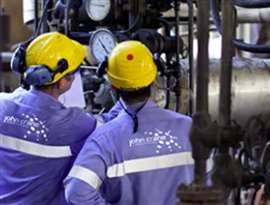 John Crane said it has developed a new drivetrain analysis methodology designed to improve the accuracy of torsional modeling in rotating equipment systems, addressing a long-standing challenge for operators and OEMs seeking to improve reliability and reduce commissioning risks.
John Crane said it has developed a new drivetrain analysis methodology designed to improve the accuracy of torsional modeling in rotating equipment systems, addressing a long-standing challenge for operators and OEMs seeking to improve reliability and reduce commissioning risks.
The company said the approach provides a more accurate representation of drivetrain behavior by accounting for changes in torsional coupling stiffness under varying operating conditions rather than treating stiffness as a fixed value, as is common in traditional analysis methods.
The development comes as operators increasingly deploy variable-speed drives and other technologies that can complicate torsional vibration analysis in compressors, turbines, pumps and other rotating equipment.
According to John Crane, conventional drivetrain models often rely on assumptions that do not fully reflect actual operating conditions, creating differences between predicted and real-world performance. Those discrepancies can contribute to vibration issues, reduced equipment life and, in some cases, unplanned outages.
The company’s methodology combines analytical modeling, static and dynamic testing, and operating data gathered from field applications to create what it describes as a more representative model of drivetrain behavior across different loads and operating conditions.
By improving the accuracy of torsional analysis, engineers can better predict critical frequencies and potential resonance issues before equipment enters service.
The approach was developed over a three-year period and validated through laboratory testing and customer applications, according to the company.
The technology could have particular relevance for operators in the oil and gas, LNG and power generation sectors, where rotating equipment reliability directly affects production and operating costs.
Torsional vibration remains a critical consideration in compressor and turbine applications because resonance conditions can lead to elevated stresses in shafts, couplings and other driveline components. Identifying those issues during the design phase is generally less costly than addressing them after equipment has been commissioned.
John Crane said the methodology has already been deployed in commercial applications and has been validated with OEMs and end users.
Steve Pennington, global engineering coupling manager at John Crane, said the methodology was developed to address limitations associated with simplified drivetrain assumptions that have historically been used throughout the industry.
As rotating equipment systems become more complex and operators seek greater flexibility through variable-speed operation, demand is increasing for more sophisticated analytical tools capable of predicting equipment behavior across broader operating ranges.
For compressor operators, the development highlights the growing role of advanced modeling and digital engineering tools in improving equipment reliability, reducing startup risks and supporting longer asset life across critical energy infrastructure.


CONNECT WITH THE TEAM