Read this article in 中文 Français Deutsch Italiano Português Español
GE Vernova raises gas turbine outlook as backlog reaches 116 GW

July 22, 2026
Manufacturer prepares to increase annual gas turbine output to 30 GW by 2030 as customers secure equipment into the next decade
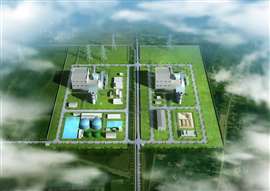 Vietnam Electricity’s (EVN) Quang Trach II LNG Power Plant in Vietnam. GE Vernova will supply two 9HA.02 gas turbines and two H78 generators for the facility. (Image: GE Vernova)
GE Vernova expects to have at least 125 GW of gas turbine equipment under contract by the end of 2026 as demand from utilities, data centers and other power users continues to stretch manufacturing schedules into the next decade.
The company ended the second quarter with 116 GW of gas turbine equipment in its backlog and slot reservation agreements, up from 100 GW three months earlier. The total consisted of 53 GW in equipment backlog and 63 GW covered by slot reservation agreements.
During the quarter, GE Vernova signed contracts covering 20 GW of gas equipment, including 18 GW of new slot reservations and 2 GW of orders. It also converted 10 GW of existing reservations into firm orders while shipping 3 GW of equipment.
CEO Scott Strazik said the company expects its contracted position to continue growing even as it raises production.
“We see a very clear pathway to continuing to grow our contracted gigawatt on order beyond this year,” Strazik said during a presentation accompanying the company’s second-quarter results. “We sit here at 116 GW right now. We’ll end the year with at least 125 GW.”
GE Vernova expects to ship at least 30 GW of gas turbine equipment during the six quarters beginning in the third quarter of 2026. Strazik said the company continues to see sufficient customer demand to increase the contracted total further in 2027.
Firm orders are expected to overtake the capacity covered by slot reservation agreements during the second half of 2026 as customers advance projects and secure engineering, procurement and construction capacity.
“That is happening because the convergence of customers with slot reservation agreements on long cycles are making progress operationally,” Strazik said. “That’s what’s driving the conversion to orders in the second half of the year.”
Manufacturing expansion progresses
GE Vernova is moving from approximately 3 GW of quarterly gas turbine output to 5 GW beginning in the third quarter. That would give the company an annualized production rate of 20 GW during the second half of 2026.
The company plans to maintain the 20-GW rate in 2027 before increasing annual output to 24 GW in 2028 and 30 GW in 2030.
Approximately 325 new machines have been installed in GE Vernova’s gas turbine factories as part of the expansion. That figure is expected to reach about 400 by the end of 2026.
Strazik said the company can already see castings and forgings entering its supply chain to support the next production increase in 2028. Additional machinery will be required to reach the 30-GW target, but much of the expansion will take place within the company’s existing manufacturing footprint.
“We’ve created more space in our factories by driving lean,” Strazik said. “We just closed on the Robotech Automation acquisition in July, and we’re making real progress with automation into our factories. That gives us more capacity within our existing footprint.”
GE Vernova began adding and training employees well ahead of the production increase. New workers were placed alongside experienced personnel so they would be prepared when the additional manufacturing capacity became available.
The company expects most of its planned 2030 output to be contracted by the end of 2026, with more than half of its expected 2031 production also under contract. Customer discussions are underway for delivery slots in 2032 and beyond, although Strazik said it is too early to determine how quickly those discussions will translate into contracts.
Aeroderivatives provide bridge capacity
Demand remains strong for both heavy-duty and aeroderivative gas turbines. GE Vernova booked orders for 52 heavy-duty units, including 15 HA turbines, and 61 aeroderivative turbines during the second quarter.
In some projects, customers are ordering aeroderivative units to provide near-term generating capacity while they wait for larger heavy-duty plants to be manufactured, constructed and commissioned.
Strazik said an aeroderivative installation can be commissioned in about six months, while a heavy-duty turbine may require another 18 months of site work after leaving GE Vernova’s Greenville, South Carolina, manufacturing operation.
Aeroderivatives therefore can provide an initial block of electricity while customers secure EPC capacity and complete larger projects scheduled for the early 2030s.
“They’re buying customer time with the first tranche of incremental electrons while they’re securing the EPC capacity for the early 2030s,” Strazik said.
He characterized the two product categories as complementary rather than competing solutions. Heavy-duty turbines continue to provide attractive efficiency for larger, long-duration generating projects, while aeroderivatives offer faster deployment and operating flexibility.
International demand supports outlook
Although North American electricity demand remains a major driver, GE Vernova also reported a healthy pipeline of international gas-fired power projects.
Taiwan remains an important market, with more than 10 GW of GE Vernova HA turbines either operating or under contract. The company is also seeing demand in Saudi Arabia and discussions about new gas-fired capacity in Mexico as the country works to strengthen its electric grid.
Strazik identified Southeast Asia as another source of activity, including discussions involving regional EPC contractors supporting gas-fired projects in other parts of the world. GE Vernova also signed gas turbine contracts in Qatar during the second quarter.
“We continue to see very healthy demand, not just in the U.S., but in a number of our global markets,” he said.
Data center development is contributing to demand across GE Vernova’s portfolio. The company received more than $5 billion in data center-related orders during the first half of 2026, more than double its total for all of 2025. Those orders include grid and electrification equipment as hyperscale operators seek both new generation and the infrastructure needed to deliver power to their facilities.
Installed fleet will expand service demand
The manufacturing investment is also intended to prepare GE Vernova for a larger gas turbine service market.
The company has approximately 130 HA turbines operating and 325 under contract. As the contracted units enter service and accumulate operating hours, their inspection and maintenance requirements are expected to produce a larger outage schedule.
Strazik said HA turbines running in baseload service typically undergo a major outage approximately every four years. Units entering service around the beginning of the next decade will therefore begin reaching their initial major outage cycle during the middle of the 2030s.
“We’re going to ultimately need some of this capacity, as you look over the long term next decade, for the services business,” he said.
GE Vernova’s total backlog reached $176 billion at the end of the quarter, divided approximately evenly between equipment and services. Strazik said the current wave of equipment orders will expand the installed fleet and support service growth well into the next decade.
The company’s Power segment recorded second-quarter orders of $16.7 billion, up 134% organically from a year earlier. Power revenue increased 14% to $5.5 billion, led by Gas Power equipment, aeroderivative deliveries and higher service activity.

CONNECT WITH THE TEAM