Read this article in 中文 Français Deutsch Italiano Português Español
Burckhardt sees LNG, energy security driving long-term demand despite order slowdown

June 04, 2026
Compressor manufacturer expects recovery in second half as customers resume investment decisions
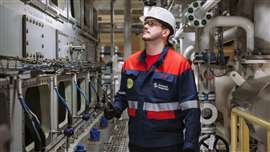 Burckhardt Compression reported a sharp decline in order intake during fiscal 2025 as geopolitical uncertainty, tariffs and project delays weighed on investment decisions, but the company remains optimistic that long-term demand. (Image: Burckhardt Compression)
Burckhardt Compression reported a sharp decline in order intake during fiscal 2025 as geopolitical uncertainty, tariffs and project delays weighed on investment decisions, but the company remains optimistic that long-term demand for natural gas, LNG, biogas and energy infrastructure will support future growth.
The Swiss compressor manufacturer recorded order intake of CHF 784.3 million, down 31.9% from the previous year, while sales declined just 3.5% to CHF 1.06 billion as the company continued executing a large backlog accumulated during several years of exceptionally strong bookings.
For the oil and gas sector, however, the more significant story lies in Burckhardt’s outlook and assessment of end markets rather than its financial performance.
CEO Fabrice Billard said the company gained market share in its core segments despite a difficult business environment and remains confident in the long-term drivers supporting demand for compression equipment.
“While short-term disruptions persist, we remain confident in long-term megatrends, particularly energy security,” Billard said.
According to Burckhardt, uncertainty surrounding U.S. tariffs and global trade flows caused many customers to postpone large capital projects during the fiscal year. The petrochemical and chemical markets were particularly affected as companies delayed decisions on major polyethylene and ethylene-vinyl-acetate projects, especially in China.
The company’s Gas Transportation & Storage segment also experienced slower activity, although LNG-related business continued to advance.
“LNG continued to grow at a good pace,” Burckhardt said in its annual results statement, even as broader market uncertainty affected project timing.
The company noted that orders for compressors used aboard LPG carriers remained healthy during the first half of the year before slowing in the second half. Refining markets provided a brighter spot, supported by growing demand for sustainable aviation fuel and continued global fuel consumption growth.
On the services side, market conditions varied significantly by region. Burckhardt reported positive activity in the Americas, driven in part by growing power requirements associated with data centers and continued LNG export development. The company also cited ongoing opportunities in marine applications as its installed compressor base continues to expand.
The company’s outlook suggests management expects current market headwinds to be temporary rather than structural.
Burckhardt believes ongoing conflict in the Middle East and broader geopolitical uncertainty will continue to affect customer spending during the first half of fiscal 2026. Assuming those disruptions ease and trade tensions stabilize, management expects a stronger market environment during the second half of the year.
“We expect stronger sales in the second half due to the timeline of project deliveries,” the company said.
Strategically, Burckhardt continued to position itself for growth in emerging energy markets through acquisitions and technology investments.
The company completed the acquisition of U.S.-based ACT to strengthen local service and spare-parts capabilities while signing an agreement to acquire Italy’s Fornovo Gas, a specialist in biogas compression. Burckhardt said the Fornovo acquisition will strengthen its position in the growing renewable gas market and provide a platform for future growth in configured compressor packages.
The company also highlighted continued investment in digital services, including artificial intelligence-based tools designed to predict compressor failures and support predictive maintenance programs.
Looking beyond current market disruptions, Burckhardt remains bullish on the sectors that have traditionally driven demand for reciprocating compressors.
The company cited growing global energy demand, expanding LNG and LPG infrastructure, investments in gas transportation and storage assets, and increasing development of renewable energy projects, biogas facilities and low-carbon fuels as key drivers of future compressor demand.
Management also pointed to energy security concerns, reinforced by recent geopolitical conflicts, as a catalyst for future investment in natural gas infrastructure and energy storage projects.
“As demonstrated again by the conflict in the Middle East, ensuring a stable and secure energy supply in an unstable geopolitical landscape requires significant investments in energy storage, gas pipelines and transportation infrastructure,” the company said.
Although Burckhardt maintained its mid-range target of CHF 1.2 billion in annual sales with EBIT margins between 12% and 15%, management acknowledged that ongoing market disruptions and currency pressures have delayed the timetable for achieving those goals. The company said it will provide updated timing once market visibility improves.
For the compression industry, Burckhardt’s results offer a mixed picture: near-term caution among customers remains evident, but the underlying demand drivers supporting investment in LNG, gas infrastructure, biogas and energy security projects remain firmly intact.

CONNECT WITH THE TEAM