Read this article in 中文 Français Deutsch Italiano Português Español
Shell approves Bahamas LNG regasification terminal

July 16, 2026
The terminal will supply natural gas for electricity generation
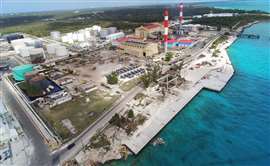 Clifton Pier, an industrial area on the western side of New Providence Island in the Bahamas. Shell has taken a final investment decision (FID) to develop a small-scale LNG regasification terminal there. (Image: Geosyntec Consultants)
Shell has taken a final investment decision (FID) to develop a small-scale LNG regasification terminal in The Bahamas, expanding the company’s LNG-to-power portfolio while supporting the Caribbean nation’s transition away from fuel oil and diesel-fired electricity generation.
As part of the investment, Shell Bahamas Power Company Inc. acquired a 40% stake in New Providence Gas Ltd. (NPG), a joint venture with Sun Oil Holdings, a subsidiary of FOCOL Holdings Limited. NPG will construct, own and operate the LNG import and regasification terminal at Clifton Pier on New Providence, the country’s largest and most populous island.
The terminal will supply natural gas for electricity generation, providing an alternative fuel to the diesel and heavy fuel oil that currently dominate the Bahamian power sector. Shell will supply LNG to the facility from its U.S. LNG portfolio, drawing on its small-scale LNG experience and regional bunkering network.
The project forms part of The Bahamas’ broader effort to modernize its power infrastructure, improve electricity reliability and diversify its energy mix. The government plans to convert existing power generation on New Providence to natural gas while expanding renewable energy deployment.
Tom Summers, executive vice president of Shell LNG Marketing & Trading, said the investment represents an important step in both the country’s energy transition and Shell’s strategy to expand its integrated gas business.
For Shell, the project strengthens its position in the growing small-scale LNG market, where imported LNG is increasingly being used to replace oil-fired generation across island nations and emerging markets lacking pipeline gas infrastructure.
The company said the Bahamas project demonstrates a scalable LNG-to-power model that could be replicated in other markets seeking to improve energy security while reducing emissions from power generation.
The development also complements Shell’s expanding LNG bunkering network, which now spans 28 locations in 13 countries.
The Bahamian government is targeting 30% renewable electricity generation by 2030 under its “New Energy Era” energy strategy. LNG is expected to serve as a transition fuel alongside increased solar generation, hybrid microgrids on the Family Islands and planned investments in natural gas-fired generation and pipeline infrastructure.

CONNECT WITH THE TEAM