Read this article in 中文 Français Deutsch Italiano Português Español
Ariel CEO sees LNG exports driving long-term compression demand

November 02, 2026
Alex Wright says growing LNG capacity and continued Permian Basin development are creating opportunities, but equipment reliability, workforce shortages and regulatory uncertainty remain concerns.
Editor’s note: For the November 2026 issue of COMPRESSORTech2, we brought together five industry executives for our annual Executive Roundtable to discuss the opportunities and challenges facing the industry in 2027 and beyond.
Their perspectives reflected the different segments of the industry they represent. Alex Wright of Ariel Corp. discussed the long-term implications of LNG development and the importance of equipment durability. George Giourof of KB Delta examined the increasing emphasis on component reliability and lifecycle costs. Jim Saunders of MurCal explored developments in controls, monitoring and equipment integration. Tyler Courtney of Regal Rexnord addressed manufacturing capacity and the growing power generation market, while Sam Thigpen of Sapphire Gas Solutions discussed the expanding role of virtual pipelines and flexible natural gas delivery.
To explore those viewpoints in greater detail, we’re presenting a five-part series on the COMPRESSORTech2 website, with an individual article devoted to each executive.
Together, these stories offer a closer look at the technologies, business decisions and market developments that will shape the next chapter of the natural gas compression industry.
Alex Wright, CEO of Ariel Corp.
Expanding LNG exports are expected to have the greatest impact on natural gas compression demand over the next five years, according to Alex Wright, CEO of Ariel Corp.
Speaking as part of COMPRESSORTech2’s 2026 Executive Roundtable, Wright compared the scale of new LNG development in North America with the changes brought about by the shale revolution.
“Ultimately, I think the math would tell you it’s LNG,” Wright said. “The liquefaction facilities being built in North America represent a step change in gas demand that is incredibly significant, akin to the shale revolution.”
Wright said the industry’s growth opportunities extend beyond the LNG export facilities themselves. Rising demand for natural gas will require additional gathering, processing and transmission capacity, along with equipment to support production from major North American basins.
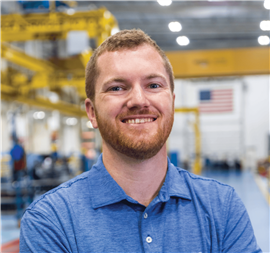 Alex Wright
The Permian Basin remains particularly important to Ariel.
“While we certainly see broad strength across all our markets, the Permian remains the most impressive basin for us,” Wright said.
Balancing horsepower and reliability
Increasing demand is also changing the size and capabilities of compression equipment.
Wright noted that reciprocating compressor packages with more than 2,000 hp, once unusual in rental, wellhead and gathering applications, have become increasingly common.
However, increasing horsepower introduces additional mechanical demands.
“In some ways, these goals are in tension,” Wright said. “We can uprate a machine, but it’s not worth anything if the uprate shortens the lifecycle.”
For Ariel, the challenge is improving compressor capacity and performance without sacrificing the durability and long operating lives customers expect.
The company continues to emphasize backward compatibility and replacement-parts support for older equipment. Wright noted that Ariel’s second compressor remains in field operation using OEM replacement parts.
Modernization opportunities include improved valves, sealing technology, capacity controls and monitoring systems.
Ariel’s Smart Compressor technology incorporates instrumentation, remote monitoring and digital twin capabilities to support equipment maintenance and operating optimization. Its electronic variable clearance pocket, or eVCP, provides automated capacity control as operating conditions change.
Workforce and regulatory challenges
Wright also identified workforce development as a significant industry concern.
Ariel has invested in apprenticeship programs and training initiatives, including programs developed with Ohio workforce authorities. The company provides training for its own employees and customer personnel.
“Trade schools play a big role here but cannot do it on their own,” Wright said. “Companies must take a more active and direct role in producing their own skilled employees.”
Despite those challenges, Wright remains optimistic about the market.
“This market is as good as I’ve ever seen it,” he said. “Demand for natural gas is on a tremendous upcycle and the opportunity is everywhere.”
The principal threat, he said, is political and regulatory uncertainty that could delay or prevent projects from moving forward.
Stable permitting and regulatory policies will be important to supporting the investments needed for LNG exports, industrial development and power generation.
Adapted from COMPRESSORTech2’s November 2026 Executive Roundtable.
CONNECT WITH THE TEAM