Read this article in 中文 Français Deutsch Italiano Português Español
Vaisala launches dew point instrument for hazardous gas applications

September 14, 2026
New DMP370 targets hydrogen, biomethane and natural gas infrastructure
Vaisala has introduced an intrinsically safe dew point instrument designed for continuous moisture measurement in hydrogen, biomethane, natural gas and other hazardous industrial applications.
The DMP370 Intrinsically Safe Dew Point Instrument extends the company’s DRYCAP dew point measurement technology into hazardous locations. The instrument is intended for applications where combustible gases or dust may be present, including hydrogen production and storage, biogas upgrading, natural gas pipelines and industrial processing facilities.
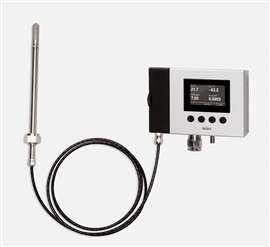 Vaisala said it is targeting the growing hydrogen and renewable gas markets with its first intrinsically safe dew point instrument DMP370.
The DMP370 combines Vaisala’s DMP37X probe and HMT370EX transmitter as a single intrinsically safe system. Intrinsic safety limits the electrical energy available within the instrument to prevent it from becoming an ignition source in an explosive atmosphere. Vaisala said the system provides continuous measurement without the interruptions associated with regeneration or heating cycles used by some moisture measurement technologies.
“As hydrogen and renewable gas projects move from pilot installations to full-scale industrial operations, the need for reliable, continuous gas-quality monitoring is growing,” said Antti Heikkilä, product line manager of industrial decarbonization at Vaisala. “Operators need measurement solutions that support both process performance and safety in hazardous locations.”
For natural gas and biomethane applications, Vaisala said the instrument can be used for biogas upgrading, grid injection and gas infrastructure monitoring, including natural gas pipelines. Other applications include hydrogen production, storage and electrolyzer output monitoring, as well as synthetic fuels, methanol production, compressed air and nitrogen systems.
The DMP370 has a dew point measurement range of -70°C to +10°C, typical accuracy of ±2°C and an operating pressure range of 0 to 40 bar absolute. It is rated for temperatures from -40°C to +60°C and is certified for hazardous locations up to Zone 0/20 under ATEX and IECEx standards. It also has FM approval for Class I, II and III, Division 1 applications in the United States and Canada.
First deliveries are scheduled to begin in the first quarter of 2027.


CONNECT WITH THE TEAM