Read this article in 中文 Français Deutsch Italiano Português Español
Power in the oilfield

August 31, 2026
Power becomes the Permian’s next infrastructure challenge
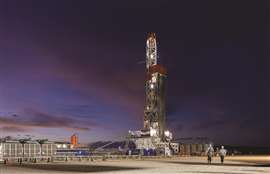 Reliable onsite power is becoming as critical to Permian development as drilling rigs and gathering systems. As operators electrify drilling, hydraulic fracturing and production operations, behind-the-meter generation is increasingly viewed as permanent field infrastructure rather than a temporary bridge solution. (Image: INNIO)
The Permian Basin’s power challenge is no longer confined to finding temporary electricity for a drilling rig or hydraulic fracturing fleet. Electrification is spreading across nearly every stage of upstream development, turning reliable power into a core element of field infrastructure alongside gathering systems, pipelines and compression.
Electric drilling rigs, electric hydraulic fracturing fleets, artificial lift, water handling and electric-drive compression are steadily increasing electricity demand across the basin. ADI Analytics estimates oil and gas operations consumed approximately 3-5 GW of electricity in 2022, with demand expected to reach 10-12 GW by 2032. Total regional demand, including data centers and other industrial users, could eventually exceed 20-25 GW.
The result is a fundamental shift in how operators approach power. Rather than viewing onsite generation as a temporary bridge until utility service becomes available, many are beginning to incorporate distributed generation into long-term field development strategies.
“It started with everyone thinking of it as a bridge solution, but I increasingly view it as a permanent part of the Permian’s energy infrastructure,” said Uday Turaga of ADI Analytics.
INNIO is seeing the same transition from the equipment supplier’s perspective.
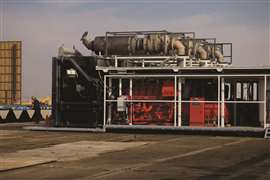 Modular engine-generator packages allow operators to add generating capacity as field development expands while providing the redundancy and flexibility needed for remote oilfield operations. (Image: INNIO)
“We increasingly see on-site, decentralized generation being incorporated into long-term field development plans rather than viewed solely as a temporary bridge solution,” the company said in response to COMPRESSORtech2 questions. “Operators need reliable power regardless of utility expansion timelines, and many are designing systems that can support operations for years while remaining scalable as demand grows.”
Beyond temporary power
Grid limitations initially drove much of the demand for onsite generation. Oil and gas development frequently progresses faster than utilities can expand transmission systems and substations, making it impractical for operators to wait years for permanent electrical service.
Today, however, the economics have broadened. Dedicated generation offers greater control over reliability, fuel supply, operating costs and resilience, particularly in remote areas where production schedules cannot depend entirely on utility expansion.
Turaga believes the long-term model will often combine utility service with behind-the-meter generation. Rather than replacing the grid, onsite power provides redundancy, supports peak electrical demand and allows operators to continue developing areas where utility infrastructure remains unavailable.
Commercial activity reflects that transition. Companies including ProPetro, through its ProPWR business, and partnerships involving Diamondback Energy, Halliburton and VoltaGrid are deploying large natural gas-fueled generation systems capable of supporting electric fracturing fleets and other power-intensive operations.
Matching generation to the load
The growth of behind-the-meter generation is also changing how operators select power equipment.
According to ADI Analytics, reciprocating gas engines are particularly well suited to distributed generation because they offer modularity, high efficiency and rapid load-following capability. Capacity can be added incrementally as drilling and production expand, making engines attractive for oilfield microgrids and distributed power applications.
Gas turbines generally become more competitive where electrical demand is larger, more centralized and relatively constant, such as major gathering hubs, gas processing plants and production campuses.
 Uday Turaga
“Reciprocating engines generally have advantages in efficiency, modularity and load-following capability,” Turaga said. “Gas turbines are typically better suited for larger, centralized, continuous-duty applications.”
INNIO said operators are increasingly deploying multiple engine-generator sets rather than relying on a single large unit. The modular approach allows generating capacity to be added or removed as demand changes while improving redundancy.
The company also noted that large-displacement gas engines provide rapid transient response during changing operating conditions. Battery energy storage systems can be integrated to improve overall system performance, while advanced controls and digital asset monitoring simplify operation and provide greater visibility into equipment health across dispersed field assets.
Field gas changes the economics
One of the Permian’s greatest advantages is its abundant associated gas production.
Rather than purchasing electricity entirely from the grid, operators can use locally produced gas to power drilling rigs, hydraulic fracturing fleets, gathering systems, compression stations and production facilities.
According to INNIO, modern reciprocating engines have become increasingly fuel flexible. Waukesha engines can operate on wellhead gas, pipeline gas, stranded gas, flare gas, compressed natural gas, liquefied natural gas and propane, often requiring little or no additional fuel treatment depending on gas quality.
That flexibility improves project economics, particularly where gas prices are weak or pipeline takeaway capacity is constrained.
However, Turaga noted that fuel quality and pressure management remain important engineering considerations. Gas composition varies among producing areas and over the life of a field, requiring engineers to evaluate dehydration, contaminant removal, pressure regulation and compression requirements based on individual project conditions.
Compression becomes part of the power system
Growing onsite generation does not reduce the importance of compression. Instead, it expands compression’s role.
Fuel gas must still be gathered, conditioned and delivered at stable pressure to the generating equipment. As reservoir pressure declines or generating assets are located farther from production, additional compression may be required to maintain reliable fuel delivery.
Compression also appears on the demand side of the equation, since many gathering systems themselves are becoming electrically driven.
“I think the implications for compression are significant and generally positive,” Turaga said. “More onsite generation creates additional demand for fuel-gas gathering, treatment and compression infrastructure.”
INNIO likewise emphasized that reliability is paramount in Permian operating conditions. High ambient temperatures, dust, remote locations and continuous-duty operation are increasing the importance of redundancy, remote monitoring and predictive maintenance. Digital monitoring systems are helping operators optimize maintenance planning while maximizing equipment uptime across geographically dispersed assets.
The similarities between contract compression and power-as-a-service are encouraging some compression companies to expand into distributed generation.
Turaga believes many already possess the operational capabilities needed for the transition. Contract compression providers understand how to deploy large engine-driven equipment quickly, maintain rotating machinery under long-term service agreements and support customers whose primary objective is uptime rather than equipment ownership.
“The core competencies of contract compression companies are really their ability to move equipment from point A to point B on demand and to be able to set up and deploy pretty quickly,” Turaga said.
The transition nevertheless requires additional expertise in generators, switchgear, electrical protection systems and microgrid controls, creating opportunities for partnerships between traditional compression companies and power system specialists.
Oil and gas operators are no longer the only customers competing for gas turbines, reciprocating engines, generators and electrical equipment.
Data center developers are rapidly increasing demand for dedicated natural gas-fired generation, often pursuing the same equipment suppliers serving the upstream energy sector.
Turaga believes hyperscale operators possess considerable financial advantages that could tighten equipment availability and extend lead times for engines, turbines, generators and switchgear. Many future facilities are expected to combine utility service with behind-the-meter generation, further increasing demand for natural gas infrastructure.
Infrastructure execution becomes the challenge
Despite strong demand, Turaga sees execution rather than market fundamentals as the industry’s primary constraint.
Lead times remain lengthy for engines, turbines, generators and electrical equipment. Skilled labor remains limited, while permitting requirements and fuel-gas infrastructure can delay projects.
At the same time, emissions requirements are becoming increasingly important during project planning. INNIO said operators are seeking solutions that satisfy permitting requirements while maintaining operational flexibility. The company noted that utilizing available natural gas together with emissions-control technologies can help support both operational and environmental objectives.
The larger change, however, extends beyond any single piece of equipment.
Power is becoming another permanent layer of oilfield infrastructure. As operators electrify drilling, fracturing, artificial lift, water handling and compression, successful projects will increasingly depend on integrating power generation, fuel-gas treatment, compression, controls and digital monitoring into a single operating system.
For the compression industry, that evolution represents an opportunity that reaches well beyond supplying another compressor package. Compressors are becoming an essential link between natural gas production and power generation, helping transform associated gas into reliable electricity that supports the next generation of Permian development.


CONNECT WITH THE TEAM