Read this article in 中文 Français Deutsch Italiano Português Español
Cetna Energy partners with MAN Energy Solutions on methanation plant

May 12, 2025
New RNG facility to produce 1 billion cubic feet annually using wood mill residues
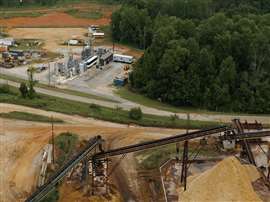 Cetna Energy’s gasification and Fischer-Tropsch plant produces syngas from saw mill residues, serving as the basis for renewable natural gas production. (Image: Cetna Energy)
Cetna Energy has selected MAN Energy Solutions to provide the methanation technology for a renewable natural gas (RNG) project in Brent, Alabama, marking a significant step forward in biomass-to-gas conversion in the U.S. Southeast.
The plant will convert wood mill residues into climate-neutral synthetic methane using a process that combines carbon dioxide and hydrogen derived from woody biomass. The facility is expected to generate approximately 1 million MMBtu annually, or roughly 1 billion cubic feet of RNG, which will be injected directly into the local natural gas grid.
“We at Cetna are very excited to be working with MAN Energy Solutions for our RNG plant in Brent,” said Mark L. Warner, president and CEO of Cetna Energy. “MAN brings to the project not only excellent technology but unparalleled experience and expertise.”
Biomass-to-RNG via methanation
The project will use syngas (a mixture of hydrogen and carbon monoxide) derived from gasified wood waste, which is then processed into CO₂ and hydrogen through a water-gas shift reaction. MAN Energy Solutions will supply its DWE® SNG methanation system, which will synthesize these gases into pipeline-grade RNG in a highly compact and efficient reactor configuration.
MAN’s solution uses a single-reactor methanation process with a small booster stage to meet U.S. gas quality specifications, minimizing both the system footprint and operational costs.
According to Wagner Canelhas, regional sales manager at MAN Energy Solutions in Houston, “This project demonstrates that MAN’s methanation technology is ideally suited for biomass gasification applications, in addition to its proven performance in Power-to-X systems.”
Sustainable production, local impact
The Brent facility is expected to produce approximately 125 MMBtu—or about 2.7 tons—of RNG per hour, while consuming about 7.2 tons of CO₂ in the process. All feedstock will be sourced from local wood processing residues, supporting both the state’s forestry economy and emission-reduction goals.
The project also underscores the growing role of RNG in decarbonizing the natural gas supply chain. As state and federal policymakers seek to scale carbon-neutral fuel sources, technologies that utilize waste biomass and existing infrastructure are gaining traction among utilities and developers, the companies said.



CONNECT WITH THE TEAM