Read this article in 中文 Français Deutsch Italiano Português Español
Tech Corner: Protecting Dynamic Compressors
June 16, 2025
Proper methods for detecting and preventing the impact of destructive gas-dynamic energy are crucial for extending the service life of the compressor: By Roman Bershader
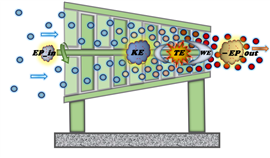
The applications of dynamic compressors can be divided into three main groups:
Aircraft engines, where axial compressors predominate;
Turbochargers for gasoline and diesel automobile engines, which use small centrifugal compressors rotating at very high speeds;
Industrial compressors, which can be used in a wide range of industries, vary in types and sizes depending on the tasks they perform: from compressed air for blast furnaces to compressed gas for oil refining or liquefaction of natural gas, etc.
All dynamic compressors have unstable operating modes known as surge, rotating stall, and choke, which are still the subject of debate, since the nature and causes of their occurrence are unclear. However, such operating modes must be avoided or prevented to protect the equipment and not disrupt normal operation. It should be noted that balancing tests of compressor rotors are usually carried out under vacuum conditions. In such conditions, neither surge, nor rotating stall, nor choking occurs, which emphasizes their exceptional gas-dynamic nature.
Dynamic compressors work with a substance that is a gaseous form of matter, consisting of many molecules or microscopic particles that are much smaller than their average distance from each other and fill the entire space in which they are located. The interactions between molecules are assumed to correspond to the kinetic theory of gases, based on the ideal gas model, in which collisions are elastic and molecules with higher temperature, and therefore higher energy, transfer energy to neighboring molecules. The mechanical rotational effect on molecules with the aim of creating increased pressure occurs in accordance with the law of conservation of energy.



CONNECT WITH THE TEAM