Read this article in 中文 Français Deutsch Italiano Português Español
Government Monitor: PHMSA proposes updates to LNG plant safety rules
November 25, 2026
Update “will fast-track new LNG infrastructure projects, lower energy costs, expand export capacity, and boost America’s status as a global energy powerhouse,” according to PHMS
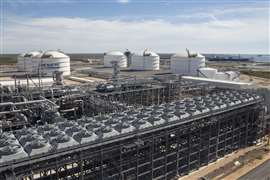
The U.S. liquefied natural gas (LNG) industry has undergone dramatic changes in the past two decades, but federal safety requirements for the industry have largely remained the same. The U.S. Department of Transportation’s Pipeline and Hazardous Materials Safety Administration (PHMSA) filed a proposal in late October to change that situation.
The update “will fast-track new LNG infrastructure projects, lower energy costs, expand export capacity, and boost America’s status as a global energy powerhouse,” according to PHMSA.
 Brian Ford
“Today’s long overdue proposal recognizes the innovation that has transformed the industry over the last ten years and enhances safety by streamlining regulatory requirements and incentivizing the deployment of cutting-edge technologies,” PHMSA Administrator Paul Roberti said in a press release.
PHMSA’s LNG regulations are largely based on the 2001 edition of an industry standard, and have not been updated since 2006, according to the agency’s proposed rules filing. Since that time, it notes, U.S. natural gas production has increased hugely, and a growing number of U.S.-based plants are exporting LNG to foreign markets.
The United States now has eight operational, PHMSA-jurisdictional export terminals, with 17.0 billion cubic feet per day (Bcf/d) of capacity, according to the agency. Sixteen additional projects, providing an additional 31.28 Bcf/d capacity, either are in construction or are expected to begin construction in the near future.
At the same time, PHMSA notes, new technologies have emerged, such as “membrane” tanks, which use a thin cryogenic steel inner liner with a load-bearing, concrete outer tank, offering improved storage capacity, reduced costs, and faster construction schedules; and pipe-in-pipe (PIP) transfer systems, which improve containment of releases from cryogenic piping.
The agency estimates annual cost savings from the proposed rule to be US$98 million. By aligning its regulations to the “latest safety-enhancing practices and technologies,” PHMSA says it would also reduce compliance costs by allowing LNG operators to use those practices and technologies without obtaining special permits or waivers.
Among other things, PHMSA says it will redesignate or remove duplicative or unnecessary regulatory requirements, revising incident and annual report forms to eliminate content with little or no safety value.
Will the changes improve the safety of LNG plants? That might be harder to quantify.
The industry already “has a remarkably strong safety record,” according to the agency. Since 2010, there has been more than a 50% increase in the number of all PHMSA-jurisdictional LNG facilities—121 facilities in 2010 compared to the 181 facilities in 2024.
That increase has not led to more incidents, PHMSA says in its filing: “Incident data across all PHMSA-jurisdictional LNG facilities shows that there have been three or fewer significant incidents reported in each of the past 15 years. In 11 out of those 15 years, one or fewer significant incidents were reported.”
Seeking to calibrate reporting requirements to public safety risks, PHMSA proposes to clarify that operators of new LNG facilities must report safety-related conditions and incidents during initial startup, “which is critical in determining its long-term integrity.”
PHMSA also proposes to broaden the definition of reported incidents and safety-related conditions to include hazardous fluids beyond LNG alone, such as ethane, ethylene, propane, butane, hydrogen sulfide and anhydrous ammonia.
Comments on the proposed changes are due no later than January 4, 2027.
PHMSA has taken other actions this year designed to increase regulatory efficiencies and reduce costs for the energy industry. It published a rule aimed at modernizing class location regulations for gas transmission lines, allowing natural gas transmission operators to use integrity management (IM) practices as an alternative to traditional pressure reductions or pipeline replacements. That rule is expected to save more than US$461 million per year and reduce maintenance-related emissions by 1.3 billion cubic feet per year.

CONNECT WITH THE TEAM