GCS sees opportunity as compression aftermarket enters new growth phase

October 12, 2026
CEO Mike Brooks says rising gas demand, stretched OEM capacity and an aging installed base are creating new opportunities for independent service providers
After roughly 35 years in the gas engine and compression business, Mike Brooks has experienced enough market swings to be cautious about declaring that this time is different.
 Mike Brooks
But the new chief executive officer of Global Compression Services (GCS) believes the forces now reshaping the natural gas industry extend beyond a conventional business cycle.
“I’ve been in this industry for about 35 years, and I would say I’ve been through five cycles,” Brooks said. “What I’m seeing right now is not a routine cycle, certainly in the natural gas industry. I would say it’s almost a generational-type transformation.”
Brooks was appointed CEO of GCS in June, bringing more than three decades of energy industry experience to the compression and gas engine services provider. He takes the position as growing demand associated with LNG exports, power generation and data center development puts additional pressure on natural gas infrastructure — and the equipment required to support it.
For GCS, Brooks sees that environment creating an opportunity for independent service providers as compressor and engine manufacturers concentrate resources on supplying new equipment.
“The industry is requiring, in our space, the gas engine and gas recip compression OEMs to provide more equipment in a shorter period of time than they ever had,” Brooks said. “And so you see long lead times, both in gas engines and compressors.”
That demand consumes manufacturing capacity and resources that might otherwise be directed toward the existing installed base, he said.
GCS operates as an independent service provider rather than an OEM, supplying aftermarket products and services for gas compression equipment as well as automation and ignition technology for gas engines. Brooks believes the current market is creating “white space” for companies such as GCS to keep existing equipment operating efficiently, safely and reliably.
“I expect this demand to last more than just a cycle,” he said.
Building on the installed base
GCS was a division of Warren CAT, the Caterpillar dealer serving West Texas, and was acquired by Lion Private Equity in 2024. Its capabilities combine businesses including H&S Valve, Ignition Services & Controls, Potemkin Industries and Global Compression Parts.
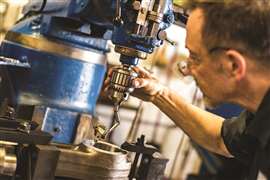
On the compressor side, Brooks said the company has spent decades reverse engineering, designing and manufacturing compressor valves and internal components across equipment from multiple OEMs.
That history has produced a substantial library of components that GCS can manufacture for equipment ranging from legacy machines to modern API 11P reciprocating compressors.
The distinction Brooks wants to emphasize is that the company does not view the aftermarket simply as reproducing an original component.
Because GCS engineers have worked across multiple compressor platforms, he said, the company can apply what it has learned about compression mechanics and component performance to develop enhancements to some replacement parts.
“We have a lot of those components that are not just me-too,” Brooks said. “We’ve designed improvements or enhancements into that part that can provide a part that might be better than what went on that engine when it left the factory 10 years, 20 years, 30 years ago.”
That capability is becoming increasingly important as operators rely on machinery that may have been in service for decades, including equipment whose original manufacturers no longer support the product or, in some cases, no longer exist.
Brooks sees independent service providers filling a role between traditional replacement-parts suppliers and OEMs. Rather than simply duplicating components, he said, successful ISPs increasingly combine engineering, manufacturing and field experience to extend the usefulness of installed equipment.
Modernizing older engines
GCS is pursuing a similar strategy with gas engine ignition and automation systems.
The company has maintained a relationship with Altronic for 37 years and is its largest distributor, Brooks said. GCS also works with Altronic during development of new technology, providing customer feedback and helping identify field applications for new products.
A particularly important opportunity involves modernizing engines still operating with older ignition and control systems.
“There are thousands of these engines out there that have very old ignition or engine controls technology,” Brooks said.
Retrofitting them requires more than installing a new control panel. Brooks said a service provider needs expertise in three areas: ignition technology, automation and the mechanical operation of the engine itself.
GCS uses those capabilities to develop configured-to-order systems incorporating ignition, engine controls or both. Such projects can replace older factory-installed technology while retaining the underlying engine.
The ability to modernize existing machinery is becoming more valuable as operators place greater emphasis on keeping available horsepower running.
Downtime gets a dollar value
The economics surrounding reliability are also changing.
As pipeline and gathering-system throughput increases, Brooks said operators are becoming more sophisticated about quantifying the cost of downtime.
“They’ll put a real number to downtime,” he said. “They’ll put a dollar in front of it.”
That is shifting maintenance away from a predominantly break-fix approach and toward greater predictability. Diagnostics, telemetry and improved controls can give operators more information about developing problems, allowing maintenance to be scheduled rather than triggered by a failure.
The distinction matters because an unplanned shutdown carries costs extending well beyond the repair itself.
“An unplanned outage is an order of magnitude more expensive than a planned outage,” Brooks said, citing both maintenance costs and the economic value of lost operating time.
GCS also sees geographic coverage as part of that reliability equation. The company operates 10 service centers across the markets and producing basins it serves. If equipment does fail unexpectedly, Brooks said proximity to technicians, parts and repair capabilities can reduce the time required to return it to service.
Old horsepower remains valuable
Strong demand for compression is also affecting the longstanding calculation between overhauling existing equipment and replacing it.
Brooks said operators historically have weighed the cost of maintaining older machinery against installing newer equipment offering lower operating costs or improved efficiency. Today’s demand environment changes that calculation because capital is frequently being directed toward adding throughput.
“There is less incentive to replace existing older horsepower with newer technology that might have a lower cost per horsepower or cost per million compressed because you’re just adding more throughput,” he said. “The capital is going towards more throughput.”
There are exceptions. A midstream operator expanding a compressor station may choose to install a larger block of new horsepower and retire older integral engine-compressors or less-efficient centrifugal equipment.
More often, however, the need for available horsepower makes reliability improvements to existing equipment attractive.
Brooks pointed to high utilization of leased compression fleets as another indication of how heavily existing assets are being used. In that environment, investments in modern ignition and engine controls can produce returns by improving reliability and fuel efficiency and reducing problems such as detonation and misfire.
Workforce pressure intensifies
Equipment capacity isn’t the only constraint confronting the compression industry.
Customers increasingly want to know how service companies intend to recruit and train enough people to support a growing market, Brooks said.
The industry’s aging workforce is hardly a new problem, but increasing activity is intensifying it. GCS and its customers face the same fundamental question: how to bring younger employees into the industry and develop their technical capabilities quickly enough to meet demand.
Brooks said fewer college graduates appear interested in what they perceive as the legacy oil and gas industry, particularly compared with sectors associated with the energy transition.
The situation looks different in producing regions.
In western Pennsylvania, New Mexico, the Permian Basin and northern Colorado, Brooks said oil and gas jobs remain attractive career opportunities, particularly in communities away from major metropolitan centers.
Geography nevertheless complicates recruiting. The Permian remains particularly challenging, and GCS and other companies sometimes recruit employees in markets such as Houston and relocate them to West Texas.
For Brooks, workforce development ultimately connects directly to company culture.
“If you’re going to grow, you’re going to need to have a company with a culture that people want to go to work,” he said. “In a growing market, they can find a job somewhere else.”
Technology speeds aftermarket development
Technology will also determine which aftermarket companies capture the opportunities created by the expanding market, Brooks said.
Engineering and reverse-engineering tools have improved substantially, allowing companies to develop components and enhancements more quickly. Brooks expects that trend to accelerate.
“Companies that can do this fast are going to be the winners in the industry,” he said. Companies that can engineer, reverse engineer and improve existing technology will gain market share, while those that are overly bureaucratic, risk-averse or slow to adopt new tools risk losing ground.
“Technology, in the end, technology wins,” Brooks said.
GCS is exploring artificial intelligence, digital twins and other modeling tools to accelerate the process of designing and testing components and enhancements.
Telling customers what GCS can do
One of Brooks’ discoveries since taking the CEO position has been less about identifying a missing technical capability than recognizing that customers may not know about capabilities GCS already has.
The company’s compressor component knowledge, for example, has largely remained internal.
“We have done a very poor job of explaining to customers and giving them, let’s say, a matrix of replacement parts that we can manufacture by compressor OEM, compressor frame and component,” Brooks said.
Developing that capability required years of reverse engineering, patterns, manufacturing drawings and accumulated technical knowledge. Brooks now wants GCS to make that information more accessible to the market.
He sees the same problem with the company’s network of 10 service centers.
“That is a huge asset,” Brooks said. “We will do a better job of communicating the capabilities at those service centers and making sure customers understand what we can and can’t do.”
He also wants to highlight GCS’ relationship with Altronic and the technology development and manufacturing investment taking place at the ignition-system manufacturer.
For Brooks, those existing capabilities provide a foundation for GCS at a time when the industry’s need for aftermarket support is increasing.
With new compression in demand and existing horsepower being pushed harder, the opportunity is increasingly about keeping the installed fleet operating while giving aging machinery access to newer components, controls and diagnostic capabilities.
That makes the aftermarket more than a source of replacement parts. In a market where every available unit of compression increasingly matters, Brooks sees it becoming an integral part of how the industry adds capacity and maintains reliability.


CONNECT WITH THE TEAM