Read this article in 中文 Français Deutsch Italiano Português Español
EFRC warns PFAS limits could undermine compressor reliability

June 15, 2026
Industry group says blanket restrictions risk higher emissions, lower efficiency and safety setbacks in reciprocating compressor service
The European Forum for Reciprocating Compressors (EFRC) is urging European regulators to carve out specific exemptions for PFAS, or per- and polyfluoroalkyl, used in reciprocating compressor sealing systems, warning that a broad restriction could compromise reliability, increase emissions and create unintended safety risks across critical industrial gas applications.
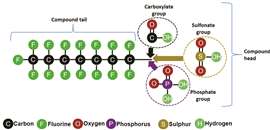 Overview of the general structure of non-polymeric, perfluorinated PFAS substances. (Image: Penn State University)
In a draft position paper submitted as part of Europe’s ongoing PFAS restriction review, the Germany-based industry group argues that fluoropolymer materials—primarily PTFE, FKM and FFKM—remain indispensable in dynamic sealing applications used in reciprocating compressors. These materials are widely used in piston and packing rings, valve plates, O-rings, oil additives and assembly sprays, as well as in adjacent applications such as PEM electrolyzer membranes.
The chemicals have been shown to harm human health and the environment. In 2024, the Environmental Protection Agency determined that there is no safe level of exposure to PFAS chemicals given how toxic they can be to humans and the environment. Some PFAS chemicals are classified as carcinogenic by the World Health Organization.
The EFRC said these materials remain essential because no technically or economically viable substitutes can replicate the combination of low friction, chemical resistance, thermal stability and wear performance required in high-duty compressor service. That is particularly true in non-lubricated reciprocating compressors handling hydrogen, process gas and other demanding applications where sealing materials are exposed to elevated temperatures, continuous wear and aggressive gas chemistries.
According to the group, industry testing shows PFAS-free alternatives can produce leakage rates up to five times higher, service life reductions of up to 10-fold and friction losses two to four times greater than current PTFE-based materials. In hydrogen fueling applications, EFRC said rod temperatures with non-PFAS alternatives can exceed 250 degrees C, creating operating conditions unsuitable for safe service.
That combination of higher friction, shorter life and greater leakage is central to the group’s argument. EFRC said restricting PFAS without a workable exemption for compressor sealing would likely increase fugitive emissions, raise maintenance frequency, reduce machine efficiency and increase the risk of unplanned shutdowns in safety-critical applications. In high-value process service, the group noted, unplanned downtime can cost operators six figures per day per compressor.
The trade group also argued that the environmental case for a blanket ban is less straightforward than regulators may assume. While PFAS restrictions are aimed at reducing long-term environmental persistence, EFRC said wear particles from compressor sealing systems are unlikely to enter the environment in meaningful quantities because they are typically captured through industrial filtration and waste treatment systems. By contrast, the group said a forced shift to lower-performing alternatives could increase gas leakage, reduce energy efficiency and require more frequent material replacement—an outcome it described as environmentally counterproductive.
Rather than support a full ban, EFRC is backing Restriction Option 3 under the European Chemicals Agency’s draft framework, which would allow continued PFAS use under defined conditions and reporting requirements. The group said that approach is the only viable path for reciprocating compressor applications, provided regulators include explicit derogations for dynamic sealing systems and long-life spare parts.
That distinction between dynamic and static sealing is central to the EFRC position. Dynamic sealing in reciprocating compressors must withstand high relative speeds, elevated temperatures, constant wear and tribological failure risks that static seals do not face, the group said. As a result, it argues the two applications should not be regulated under the same assumptions.
The group also warned that transition timelines under discussion in Europe are unrealistic for compressor applications. While an 18-month transition may be workable in lower-speed rotating equipment where alternatives already exist, EFRC said reciprocating compressor sealing would require five to 10 years of qualification and certification after any viable substitute is identified. Material development alone, it added, could take another decade.
That timeline matters because reciprocating compressors are long-life assets, often operating for 20 years or more in refinery, chemical, hydrogen and gas transmission service. Without explicit spare-parts exemptions, EFRC said operators could be left with installed machines that cannot be safely maintained over their normal operating life.
The paper also calls for regulators to distinguish fluoropolymers such as PTFE from other PFAS chemistries in the final rule. EFRC argues polymeric PFAS used in compressor components present a different risk profile than fluorinated fluids and should be treated separately—subject to traceability and reporting, but not an outright ban.
For compressor manufacturers and operators, the issue is likely to extend well beyond Europe. While the immediate debate is tied to EU chemical policy, any restrictions affecting PTFE-based sealing materials would have implications across global supply chains, qualification standards and long-term compressor maintenance strategies—particularly in hydrogen compression and other non-lubricated gas services where material performance margins are already narrow.
Image: PFAS structure
Overview of the general structure of non-polymeric, perfluorinated PFAS substances. (Image: Penn State University)



CONNECT WITH THE TEAM