Read this article in 中文 Français Deutsch Italiano Português Español
U.S. natural gas storage ends injection season above five-year average

November 18, 2026
EIA reports 3,810 Bcf in storage as higher production and relatively mild weather support winter inventory outlook
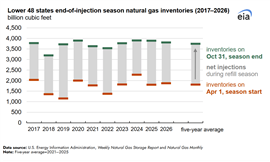
Working natural gas inventories in the Lower 48 states ended the 2026 injection season at 3,810 billion cubic feet (Bcf), nearly 2% above the five-year average, according to the U.S. Energy Information Administration (EIA).
The figures, based on EIA’s Weekly Natural Gas Storage Report released Nov. 12, indicate that storage operators entered the winter heating season with inventories above historical norms despite relatively modest injections during the refill period.
The injection season runs from April 1 through Oct. 31, when natural gas demand is typically lower.
According to EIA, net injections during the 2026 season were 2 Bcf below the five-year average. However, working gas inventories began the season at 1,878 Bcf, or 63 Bcf (3%) above the five-year average, reducing the amount of additional gas needed to reach end-of-season storage targets.
LNG demand absorbs production growth
U.S. dry natural gas production during the 2026 injection season increased 3% compared with the same period in 2025, according to S&P Global Energy data cited by EIA.
However, much of that additional production was used to meet growing demand from LNG export terminals rather than being injected into underground storage.
Weather also influenced storage activity throughout the season.
Mild spring temperatures reduced residential and commercial natural gas consumption, allowing the storage surplus relative to the five-year average to reach 198 Bcf, or 7%, during the week ending Aug. 7.
The surplus subsequently declined for 10 consecutive weeks as warmer-than-normal summer temperatures increased natural gas demand for electricity generation.
Mild weather returned during the final weeks of the injection season, supporting above-normal storage injections.
Weekly injections ranged from a high of 108 Bcf in early June to 15 Bcf in late August, EIA reported.
Inventories expected to remain above average
In its November Short-Term Energy Outlook, EIA forecast natural gas withdrawals totaling approximately 1,900 Bcf during the 2026-2027 heating season, which runs from Nov. 1 through March 31.
The agency expects working gas inventories to finish March 2027 approximately 4% above the five-year average, reflecting expectations for a relatively mild winter and continued growth in natural gas production.
The outlook suggests that U.S. natural gas inventories could remain relatively well supplied through the winter, even as LNG exports continue to absorb a growing share of domestic production.



CONNECT WITH THE TEAM