Read this article in 中文 Français Deutsch Italiano Português Español
Ebara Elliott Energy powers into the future with 100 MW test expansion

February 23, 2026
New Jeannette facility transforms LNG and midstream compressor testing, enabling full-load validation for the era of electrification
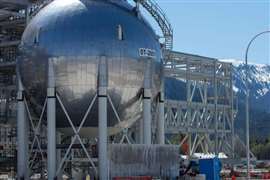
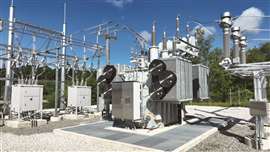 Ebara Elliott Energy (EEE) has completed a major electrical upgrade at its Jeannette, Pennsylvania, manufacturing complex, expanding its turbomachinery testing capabilities for high-power compressor and drive systems.
Ebara Elliott Energy (EEE) has completed a major electrical upgrade at its Jeannette, Pennsylvania, manufacturing complex, expanding its turbomachinery testing capabilities for high-power compressor and drive systems. The multi-year, $100 million project includes a full-speed, full-load compressor test facility capable of operating equipment up to 100 MW, or about 134,000 hp.
For EEE and its customers in the liquefied natural gas (LNG), pipeline and process industries, the Jeannette upgrade is more than an infrastructure improvement—it’s a bridge between the conventional gas-turbine era and the emerging age of large electric drives, digital validation and sustainable energy systems.
“This project puts us on par globally,” said Ron Josefczyk, vice president of new apparatus at Ebara Elliott Energy. “It is the largest compressor testing capability in the Americas, and one that positions us for the next generation of LNG and midstream projects focused on electrification, reliability and emission reduction.”
A five-year journey to 100 MW
EEE’s upgrade, completed in late 2025, was five years in the making. Planning began around 2020 as the company recognized growing customer interest in electric-drive compression. “We identified the trend toward high-power electrification many years ago,” said Ron Josefczyk, who oversaw much of the effort. “With the push to reduce emissions and shorten project cycle times, we saw that large electric motors and variable frequency drives (VFDs) were about to transform the industry.”
The company partnered with First Energy and West Penn Power to install a new 138-kV main breaker, a 100-MVA power transformer, and a complex series of capacitor banks to ensure stable and clean power delivery. The effort required extensive modeling to manage grid interaction—an unusual challenge for a manufacturing facility but one that was essential to avoid destabilizing local power systems.
“Drawing or rejecting 100 MW is not like flipping a light switch,” Josefczyk explained. “This level of power could feed a small city. If not managed correctly, a sudden inrush or trip test could cause significant grid fluctuations.”
To mitigate that risk, EEE developed what Josefczyk described as a capacitance damping system—essentially an electrical shock absorber that protects both the plant and regional grid. “It acts as a buffer during power surges or load rejections,” he said. “We spent nearly a year simulating test conditions with our partners to make sure the system would perform safely and reliably.”
The facility now enables full-speed, full-load testing of compressors and associated electrical equipment up to 100 MW. In practical terms, that means customers can validate not only aerodynamic performance but also gear loading, torsional rotordynamics and electrical performance under real-world operating conditions—all before installation.
Electrification reshapes compressor design
For decades, gas turbines have dominated large-scale LNG and pipeline compression because they offered a ready on-site power source using the same fuel being processed. But they also brought emissions, permitting complexity and maintenance intervals that limit uptime.
“Gas turbines revolutionized LNG compression in their day,” Josefczyk said. “But the limitations—hot-section change-outs, downtime, emissions—became barriers as the industry pushed toward lower-carbon operations.”
In contrast, modern high-power electric motors paired with advanced VFDs have reached levels of torque and efficiency unimaginable just 10 years ago. They operate with near-zero site emissions, longer continuous runtimes and faster permitting approvals.
“The biggest advantage of electric drives is continuous reliability,” Josefczyk said. “Unlike gas turbines that must shut down periodically for maintenance, electric motors can run for years without interruption. Even a two-day shutdown can cost operators millions in lost production.”
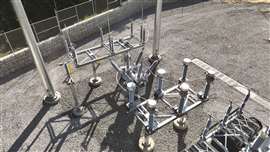 Ebara Elliott Energy (EEE) has completed a major electrical upgrade at its Jeannette, Pennsylvania, manufacturing complex, expanding its turbomachinery testing capabilities for high-power compressor and drive systems.
That reliability—combined with the environmental benefits and simplified permitting—has led many midstream and LNG developers to favor electrification wherever grid access allows.
Powering the LNG pathway to sustainability
Josefczyk views LNG not just as a profitable sector but as a bridge fuel toward a cleaner energy system. “When we look 20, 30 or 40 years out, we see LNG as the carrier vehicle that gets us to a sustainable, low-emission future,” he said.
EEE has deep roots in LNG, tracing back to its origins under Carrier Corp., when Elliott pioneered mixed-refrigerant compressor technology used in early liquefaction trains. Over the decades, the company’s machines have remained fixtures in petrochemical and refrigeration service worldwide.
As LNG plant developers now prioritize electrified drive systems, EEE’s expanded testing capacity directly supports that transition. “Our 100-MW capability lets us validate large mixed-refrigerant compressors—the most demanding applications in LNG service—under full operating loads,” Josefczyk said.
These compressors, often equipped with multiple sidestreams to optimize thermodynamic efficiency, require precise performance matching to plant design parameters. Even slight variations in head or flow can impact train productivity. “Full-load testing ensures that what we build in Jeannette performs exactly as designed in the field,” Josefczyk said.
From feasibility to field reliability
Before upgrading, EEE’s test stands were limited to smaller load simulations using steam or gas turbine drivers. The expansion gives the company the ability to connect directly to the regional grid for electric-motor testing at unprecedented scale.
“Providing 100 MW of stable power required years of coordination,” Josefczyk recalled. “We worked with West Penn Power, the state, our local community and our internal specialists to make sure we weren’t just getting power, but clean, reliable power.”
The resulting system is flexible enough to replicate real-world conditions encountered in different parts of the world. By combining transformer options and VFD conditioning, EEE can mimic regional grid frequencies, voltage profiles and transient responses.
“That flexibility allows us to validate performance for customers in North America, Europe or Asia under conditions representative of their actual installations,” Josefczyk said.
The outcome is reduced project risk and shorter commissioning timelines. “By confirming torsional behavior, electrical performance and aerodynamic output in our factory, we minimize the surprises that can arise during startup,” he said. “It shortens commissioning time and lowers total project cost.”
Meeting grid challenges head-on
While the electrification trend is accelerating, grid availability remains a constraint in some parts of the world. In regions with unreliable or isolated power networks, gas-turbine drives still have a role.
Josefczyk said those considerations are typically settled long before EEE’s involvement. “Power access is one of the first items evaluated in feasibility studies,” he said. “If the site lacks reliable grid power, the project will lean toward turbine drives from the outset. In more developed power markets, electrification is the natural choice.”
That geographic split shapes EEE’s business strategy: supporting both worlds with a versatile product portfolio. The Jeannette facility now complements EEE’s cryogenic pump and expander test stands, commissioned several years earlier to serve LNG and other low-temperature applications. Together, these facilities make Jeannette a one-stop center for compression, liquefaction, and regasification equipment testing.
LNG today, hydrogen tomorrow
The innovations underway in LNG compression have direct applications to emerging clean-energy markets, Josefczyk said. “All of the developments going into LNG—cryogenic temperatures, compression, liquefaction, and regasification—will apply directly to future non-hydrocarbon fuels,” he said.
EEE’s engineers are already applying lessons from LNG to equipment designed for hydrogen, ammonia and carbon capture projects. These markets remain in early stages of commercialization, but the technical parallels are strong.
“Many of the same challenges—low temperatures, gas purity, and compression efficiency—carry over,” he said. “So the investments we’re making in LNG infrastructure and testing are preparing us for the next generation of sustainable projects.”
For midstream operators under pressure to deliver new capacity quickly, time has become as critical as technology. “Our customers are pushing for shorter delivery and commissioning schedules,” Josefczyk said. “Full-load testing at Jeannette helps them achieve that by removing uncertainty before equipment ever reaches the field.”
That certainty is increasingly valuable as compressor trains grow larger and more complex. A 100-MW electric motor represents a significant capital investment; verifying its interaction with the driven compressor—especially torsional resonance behavior—can prevent costly delays later.
Dynamic simulations can predict performance, but only full-load testing can confirm it. “We can now expose compressors to the exact operating torques and electrical ripple they’ll experience in service,” Josefczyk explained. “That means less tuning and troubleshooting during commissioning and more confidence in long-term operation.”
Collaboration across the power spectrum
EEE’s 100-MW capability was made possible by tight collaboration among public utilities, state regulators and the company’s engineering teams. “It took about two years of feasibility studies with First Energy before we could even begin detailed design,” Josefczyk said. “Then another three years of engineering, construction and commissioning.”
The outcome, he said, is a facility that not only meets EEE’s needs but also safeguards the regional power grid. “We wanted to be sure that every time we start or stop a test, we’re not affecting our neighbors,” he said.
“This power draw is equivalent to what you’d see for a small city,” he added. “It’s our responsibility to use it safely and sustainably.”
The project also benefited from strong community and state support. Jeannette’s century-old legacy as a turbomachinery manufacturing center made it a natural location for continued investment.
Positioning for North America’s LNG buildout
With North America emerging as one of the world’s fastest-growing LNG export regions, EEE’s new test capability is timely. “Most LNG opportunities in the coming decades will rely on the abundance of natural gas in North America,” Josefczyk said. “Our Jeannette operation gives us the ability to support those projects from concept through commissioning.”
EEE’s global service network—29 facilities worldwide, including multiple U.S. locations—enables rapid field support once equipment is installed. “From design and manufacturing to testing and aftermarket service, we provide full lifecycle coverage,” he said. “That’s a level of support few others can match.”
The company’s expanding presence also strengthens ties with major pipeline and LNG developers who increasingly demand turnkey solutions. By offering both compression and pump technologies under one roof, EEE can tailor integrated systems for liquefaction, storage and regasification.
Josefczyk emphasized that the Jeannette expansion is as much about sustainability as it is about scale. Electrified drives eliminate local emissions, while full-load factory validation reduces the environmental footprint of field commissioning—shortening start-up times and minimizing on-site rework.
“Our customers are all trying to get to cleaner, faster, more reliable operations,” he said. “Whether it’s through electrification, better efficiency or digital validation, our goal is to support that transition.”
EEE now stands as one of only a handful of companies worldwide with 100-MW compressor test capacity, and the only one in the Americas with integrated cryogenic and electric-drive testing in a single campus.
Josefczyk said the company’s long-term strategy reaches well beyond 2030. “We’re looking 30 to 40 years out,” he said. “Energy demand will keep increasing, and technologies will evolve, but the fundamentals remain the same—efficiency, reliability and sustainability.”
For Ebara Elliott Energy, that means staying ahead of industry shifts while keeping its engineering roots strong. “Our history has always been about adapting—whether it was steam turbines a century ago or electric drives today,” he said. “The Jeannette upgrade ensures that we’re ready for whatever comes next.”
Ebara Elliott Energy’s Jeannette facility stands as both a symbol and a tool of transition—proof that heavy industrial equipment can evolve alongside global energy systems.
“Electrification isn’t just about meeting emissions targets,” Josefczyk concluded. “It’s about improving reliability, safety and speed. Our customers want equipment that performs exactly as designed the first time it starts. That’s what this facility delivers.”

CONNECT WITH THE TEAM